Rivers have become a regular feature in news headlines about the environment as they face a wide range of pressures from human activity. While wastewater often dominates these headlines, it represents only one part of a much bigger picture. Our rivers can be affected by many different pollutants and factors, each with its own sources, behaviours and potential impacts on wildlife and people. Understanding what these pollutants and other factors are, how they enter our waterways, and what levels are considered safe is an important step in protecting and restoring healthy river ecosystems.
What are they?
Pathogens are defined as microorganisms, such as bacteria, viruses and protozoa, that can spread diseases. In river environments, common groups of these pathogens include:
- Bacteria such as E. coli, Salmonella and Campylobacter
- Viruses such as norovirus, adenovirus and hepatitis A
- Protozoa such as Cryptosporidium and Giardia
These pathogens typically originate from the faecal waste of humans, livestock and wildlife – while most occur naturally at low levels, it is often human activity that can increase their concentrations in rivers, raising ecological health and public safety risks.
They can enter our local waterways through numerous ways, including:
- storm overflows – heavy rainfall can overwhelm sewer systems, releasing diluted sewage directly into rivers
- agricultural runoff – manure, slurry and livestock waste often washes into our watercourses during rainfall
- urban runoff – contaminated surface water can enter our drainage systems
- septic tanks – poorly maintained or leaking systems can discharge pathogens into groundwater and nearby water bodies
- wildlife – local fauna contribute naturally, although at much lower levels than human and agricultural sources
Since pathogens are a biological pollutant rather than chemical, their presence can fluctuate rapidly in rivers depending on the level of rainfall, temperature, flow conditions and land use.
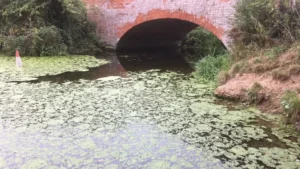
A bridge in Ufford that crosses the Deben, which flows on to Woodbridge and Felixstowe Ferry by Guy Campbell
What are the impacts?
Pathogens pose a significant challenge as they affect rivers, their associated wildlife and human health in multiple interconnected ways. In water, pathogen levels can fluctuate rapidly with the environmental conditions and they can survive for long periods in sediments, wet soils and biofilms. Sediments in particular can act as stores for pathogens, releasing them back into the watercourse during high flows or disturbance. As they are also difficult to monitor consistently, frequent sampling is often required and even low concentrations can pose direct risks to human health.
For example, pathogens in rivers can cause illness through:
- recreational contact – swimming, paddling, angling, watersports etc.
- drinking water abstraction – where rivers/groundwater feed public supplies
- food contamination – particularly shellfish harvested from estuaries that are exposed to upstream pollution
Some illnesses that are linked to pathogen exposure can range from gastrointestinal infections to more serious conditions in vulnerable individuals.
In addition, some pathogens can also have a significant impact wildlife, including:
- stress or disease outbreaks – this may affect fish and amphibian populations in heavily contaminated waters
- habitat degradation – high pathogen loads often coincide with low oxygen and poor water quality, negatively affecting invertebrates and aquatic plants
- accumulation – shellfish in estuaries can accumulate pathogens, affecting both wildlife health and food safety
In summation, pathogen pollution rarely occurs in isolation and is often accompanied by elevated nutrient levels, excess ammonia and organic matter and reduced levels of dissolved oxygen. These combined pressures can alter river ecology, reduce biodiversity and disrupt natural processes.
As pathogens come from multiple sources, no single intervention is sufficient; a common theme among the river pollutants we have explored thus far in this series of articles. Key things to prioritise in addressing for this particular pollutant are:
- reducing inputs at the source – such as improving sewer infrastructure and ensuring septic tanks are properly maintained
- improving treatment and management – perhaps by installing wetlands to naturally filter pathogens before they reach the river
- strengthening monitoring and public information – through clearer public reporting of sewage spills and pollution events and involvement of citizen science in tracking local water quality trends
Overall, pathogens as river pollutants are a widespread and growing concern, but through improved monitoring, stronger regulation and partnership working, pathogen inputs can be reduced and our river ecosystems can be better protected. By increasing our understanding of how pathogens behave, where they originate from and their impact on rivers, we can work together to design more effective and long-term solutions that help safeguard the health of communities and wildlife in the future.