Rivers have become a regular feature in news headlines about the environment as they face a wide range of pressures from human activity. While wastewater often dominates these headlines, it represents only one part of a much bigger picture. Our rivers can be affected by many different pollutants and factors, each with its own sources, behaviours and potential impacts on wildlife and people. Understanding what these pollutants and other factors are, how they enter our waterways, and what levels are considered safe is an important step in protecting and restoring healthy river ecosystems.
What is it?
Turbidity occurs naturally during high flows, but human activity has significantly increased the frequency, duration and intensity of turbid conditions in many river systems. Turbidity is described as the cloudiness or haziness of water caused by tiny suspended particles, typically fine sediments, but can also consist of organic matter and pollutants.
Turbidity in rivers can arise from a combination of natural processes and human-driven pressures, such as:
- Agricultural runoff – soil erosion from ploughed fields and poorly vegetated margins can contribute large quantities of fine sediment in runoff
- Urban runoff – roads, construction sites and drainage systems wash sediment, road debris and organic matter into watercourses
- Bank erosion – straightened channels, high flows and loss of riparian vegetation destabilise banks, releasing sediment directly into the river
- Wastewater discharges – storm overflows and treatment works can release suspended solids and organic matter into watercourses
- Legacy sediments – historic land use, dredging and channel modifications have left large stores of fine material in many lowland rivers, which can be disturbed and re-mobilised during high flows
- Algal blooms – nutrient enrichment can trigger phytoplankton growth, increasing turbidity even when sediment inputs are low
Across the Essex catchment, turbidity is influenced by a combination of diffuse and point-source inputs, including soil erosion, urban runoff, wastewater discharges and the disturbance of legacy sediments stored in lowland channels. As Essex rivers are typically low-gradient and sediment-rich, they can be particularly vulnerable to prolonged periods of elevated turbidity. The pressure of turbidity can be particularly strong in intensively farmed catchments, urbanised tributaries, areas with eroding banks and lowland rivers where fine sediments naturally accumulate. Understanding the relative contribution and impact of each source is essential for designing effective interventions and mitigation.
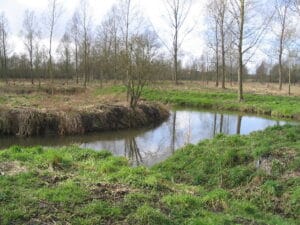
River Blackwater near Horseshoe Hole by Angela Tuff
What are the impacts?
High turbidity can pose a significant ecological challenge as it alters the physical, chemical and biological processes of rivers. For example, suspended particles block sunlight from reaching aquatic plants and algae, which can reduce photosynthesis, limit oxygen production and disrupt the base of the food web. In highly turbid rivers, submerged plants may disappear entirely and reduce habitat complexity for fish and invertebrates. It can also induce other stressors on aquatic life, such as clogging the gills of fish with fine sediments and impairing their feeding, respiration and reproduction. Species that rely on visual cues may also struggle to hunt in persistently cloudy waters.
Riverbeds can also be smothered in times of high turbidity when suspended particles settle and blanket gravel beds, filling the spaces between stones. This can reduce spawning habitats for fish like trout and can smother the eggs of other species. Invertebrates that depend on clean, well-oxygenated gravels can also be negatively affected by this.
As fine sediments readily bind to nutrients, pathogens, hydrocarbons and heavy metals, these pollutants are transported further and remain in the water column for a longer period of time during high turbidity. Once deposited, these can accumulate in riverbed sediments and be re-mobilised during storms or dredging.
Catchment-scale restoration is key to tackling turbidity as the problem is rarely caused by a single source. A combination of nature-based and engineered solutions can help reduce sediment inputs and improve water clarity. Natural flood management can be used to slow flows and trap sediment upstream, creation of wetland can help capture fine particles and associated pollutants and riparian buffer strips can stabilise banks and intercept runoff. Other solutions include improved soil management to reduce farmland erosion, swales and retention ponds can help control urban runoff and the re-meandering can create more stable and resilient river channels.
Through continued monitoring, partnership working and targeted interventions, turbidity pressures can be reduced and the recovery of sensitive species can be recovered. By understanding how turbidity behaves and its sources, more effective and long-term solutions that can help rivers move closer to good ecological status can be designed and implemented.