PFAS in Rivers: what are they and how do they impact rivers?

Rivers have become a regular feature in news headlines about the environment as they face a wide range of pressures from human activity. While wastewater often dominates these headlines, it represents only one part of a much bigger picture. Our rivers can be affected by many different pollutants and factors, each with its own sources, behaviours and potential impacts on wildlife and people. Understanding what these pollutants and other factors are, how they enter our waterways, and what levels are considered safe is an important step in protecting and restoring healthy river ecosystems.


What are they?

PFAS (per‑ and polyfluoroalkyl substances), also known as ‘forever chemicals’, are a group of thousands of human‑made chemicals used since the 1940s for their water, oil and heat resistant properties.

They are found in products ranging from non‑stick cookware and waterproof clothing to firefighting foams, medical devices and industrial processes. The strong carbon‑fluorine bonds they possess make them extremely resistant to breakdown, earning them this name of ‘forever chemicals’ because they persist in the environment for decades or even centuries. Monitoring by the Environment Agency shows PFAS are now widely prevalent in English rivers, estuaries and groundwater, with at least ten PFAS compounds regularly detected in surface waters.

PFAS can enter rivers through multiple pathways, including:
• Industrial and manufacturing sites – historical and ongoing releases from chemical plants, metal plating, textiles and electronics
• Firefighting foams – especially from training grounds, airports and military sites
• Wastewater treatment works – PFAS pass through most treatment processes unchanged and are discharged into receiving rivers
• Urban runoff – household products, cosmetics, food packaging and textiles often wash into drainage systems
• Landfill leaching – PFAS migrate from waste sites into groundwater and surface waters
• Atmospheric deposition – PFAS can travel long distances before settling into soils and rivers

Because PFAS are so persistent and mobile, even remote rivers far from industrial sources can show contamination.
 

PFAS in Rivers: what are they and how do they impact rivers? | Essex Rivers Hub

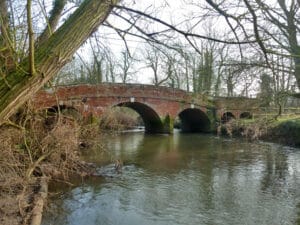
Wickham Mill Bridge over the River Blackwater by Robin Webster


What are the impacts?

PFAS pose a significant challenge as they affect rivers, wildlife and human health in multiple interconnected ways.

For example, they accumulate in aquatic organisms, moving up food webs and persisting for years with some studies in the UK detecting PFAS in freshwater fish, estuarine sediments and even otters, suggesting widespread exposure. Their persistence and ‘forever chemical’ nature means that once PFAS enter a river system, they can remain for generations, continually cycling between water, sediment and biota. Negative effects of this include bioaccumulation and biomagnification in predators, such as fish-eating birds and mammals, impacts on growth/reproduction/immune function in aquatic organisms and long-term contamination of sediments.

In addition, PFAS can enter our drinking water supplies if contaminated rivers or groundwater are used as sources. Monitoring of this shows that PFAS are already present in many UK water bodies, including aquifers and reservoirs.


Unlike many of the other pollutants covered through this series of articles, PFAS present unique challenges as they:

  • do not degrade naturally
  • are highly mobile and can spread through water, soil and air
  • bind weakly to sediments, enabling them to travel great distances
  • exist in thousands of different forms, most of which are not routinely monitored for

This makes PFAS one of the most complex emerging pollutants that rivers face.


Since PFAS come from multiple sources and persist for decades, no single intervention is sufficient. Solutions at the catchment-scale are required to address this issue, such as:

• reduction at the PFAS source – phasing out non‑essential uses in products such as firefighting foams, textiles and food packaging
• improvement of industrial controls – stricter permitting, monitoring and treatment at high‑risk sites
• upgrading wastewater treatment – advanced technologies such as activated carbon, ion‑exchange resins and high‑pressure membranes can remove PFAS, although costly
The widespread presence, long‑term persistence and potential impacts on wildlife and human health mean that action cannot be delayed against PFAS. Through improved monitoring, stronger regulation, partnership working and targeted interventions, PFAS inputs could be reduced and our river ecosystems could be protected from further harm.
By understanding how PFAS behave, where they originate from and their overall impact on rivers, we can work together to design more effective, long-term solutions that help support rivers in moving towards good ecological status while also safeguarding the health of communities and wildlife for generations to come.

Get Involved Today

Find out about the latest volunteer opportunities and explore our hub of resources.

Related Stories

Pressures

The topics below represent the pressures that many waterbodies in the Combined Essex catchment face. They have been divided into six main categories, but it is quite often that these categories can overlap as pressures relate to each other.

Diffuse Pollution

Diffuse pollution occurs as water moves across the land or through the ground and picks pollutants. These pollutants can come from a variety of places, including urban and field run off. The pollutants that enter the river can range from sediment to toxins to excess nutrients, meaning that diffuse pollution can cause a whole range of different issues. The variety in these pressure groups means that it is something that can be quite difficult to tackle. It requires groups of people, business and stakeholders to work together in order to solve this problem.

Fish Passage

Fish should be able to travel up and down a river freely, allowing them to move and breed in the most suitable habitats for them. It is important that fish populations do not become isolated, as this makes them more susceptible to disease and puts pressure on their survival. Unfortunately, there are often many barriers along rivers that prevent fish from being able to migrate up and down stream. Where barriers have been identified, they will be seen as a ‘pressure’ on a waterbody. Thankfully, there are many solutions now that can be put in place to aid fish passage, even over large barriers.

Flow

The flow in a river can vary greatly throughout the year as rainfall and run off can have an effect. This is a natural process. It is when flow is impacted by non-natural processes that it can cause problems. Sometimes, water can be intercepted or removed from a system; this will reduce the flow, therefore changing the habitat conditions. Some species are happy in high energy rivers. This means that when flow is reduced, these species will no longer survive. The opposite of this can occur when excess water is entering a river, for example through increased runoff. Low energy systems then become high energy and displace the species that live there.

Invasive Species

A species that is not meant to be found in a particular area is known as an invasive species. Invasive species can be from a different habitat or a different country altogether. Most of the invasive species that we find on our rivers have come from other countries – plants that people have imported for their gardens or animals that have been released for food or by animal rights activists. Control of invasive species requires a lot of time and effort. We are fortunate that we do have a range of methods to manage most of the invasive species that cause havoc on our rivers, but there are still some which we are still struggling to control.

Physical Modification

Many of our rivers have been heavily modified over the years as rivers have been used for a wide range of purposes. Physical modification is one of the biggest factors that causes our rivers to be unhealthy. The issues that it can cause range from reducing habitat, preventing migration of mobile species, and even have an effect on the water quality. Where structures and modifications are no longer in use or necessary, they should be removed to allow the river to regain its natural state. Unfortunately, this action is not always taken which means that many of our rivers are over straightened and contain redundant structures. It is possible to return a lot of our rivers to their natural state, through one off projects, but in other cases it is not possible as the river has been changed to protect assets or manage flooding. It is recognised that some modifications cannot be removed without having severe negative impacts both socially and economically.

Point Source

This is pollution that comes from a single identifiable source. The pollution entering the river could include a whole range of pollutants. Some point source pollution is known about and licences, for example sewage treatment works. Other sources are not licensed, and therefore work needs to be done with landowners to fix the problems that are allowing the pollution to enter the river. Point source pollution is more easily controlled than diffuse pollution as it often only takes one management approach to solve the issue.